
About the Department
Computer Science Engineering with a specialization in Cyber Security established in 2020, this program focuses on building secure digital systems to tackle modern cyber threats. It combines core computer science with specialized skills in ethical hacking, cryptography, cyber forensics, and secure software development.
Students gain hands-on experience through advanced labs and learn industry tools aligned with global standards. The curriculum also includes programming (C, Python, Java) and emerging elective subjects like Cyber Law& Security Policy, Elliptical Curve Cryptography and Web Application Security.
Graduates are well-prepared for roles such as Cyber Security Analyst, Ethical Hacker, Security Architect, and Cloud Security Engineer, with opportunities in MNCs, government sectors, and beyond.

Vision
To be a leading Centre of excellence in cyber security education, research, and innovation, producing skilled and ethical professionals who contribute to a safe and resilient digital society.

Mission
1-Provide strong foundational knowledge and practical skills in cybersecurity for successful career development.
2-Inculcate ethical values, legal awareness, and professional responsibility in securing digital systems and data privacy.
3-Promote lifelong learning, research, and innovation for sustainable and reliable solutions in cybersecurity.
Highlights of the Department
- Well qualified and prominent faculty skilled on Outcome Based Education (OBE)
- Modern pedagogy with Smart Class Rooms
- State of the art Teaching Learning Process
- Department library with e-Journals and video lectures
- Industry associated technology clubs
- Global Certifications
- Operative Student Professional Chapters
- Industry Academic Centers
Outcome Based Education
PEO (Programme Educational Objectives)
PEO1: Graduates will apply cyber security knowledge and practical skills in their careers.
PEO2: Graduates will practice values, ethics and legal competency in protecting digital systems and data privacy.
PEO3: Graduates will engage in lifelong learning and collaborate with industry and academia.
PO (Program Outcome)
1. Engineering Knowledge
Apply knowledge of mathematics, natural science, computing, engineering fundamentals, and an engineering specialisation as specified in WK1 to WK4 to develop solutions for complex engineering problems.
2. Problem Analysis
Identify, formulate, review research literature, and analyze complex engineering problems reaching substantiated conclusions with consideration for sustainable development (WK1 to WK4).
3. Design / Development of Solutions
Design creative solutions for complex engineering problems and design/develop systems, components, or processes to meet identified needs with consideration for public health and safety, whole-life cost, net zero carbon, culture, society, and environment as required (WK5).
4. Conduct Investigations of Complex Problems
Conduct investigations of complex engineering problems using research-based knowledge including design of experiments, modelling, analysis, and interpretation of data to provide valid conclusions (WK8).
5. Engineering Tool Usage
Create, select, and apply appropriate techniques, resources, and modern engineering and IT tools, including prediction and modelling, recognizing their limitations, to solve complex engineering problems (WK2 and WK6).
6. The Engineer and the World
Analyze and evaluate societal and environmental aspects while solving complex engineering problems for their impact on sustainability with reference to economy, health, safety, legal framework, culture, and environment (WK1, WK5, and WK7).
7. Ethics
Apply ethical principles and commit to professional ethics, human values, diversity and inclusion, and adhere to national and international laws (WK9).
8. Individual and Collaborative Team Work
Function effectively as an individual, and as a member or leader in diverse and multidisciplinary teams.
9. Communication
Communicate effectively and inclusively within the engineering community and society at large, including the ability to comprehend and write effective reports and design documentation, and make effective presentations considering cultural, language, and learning differences.
10. Project Management and Finance
Apply knowledge and understanding of engineering management principles and economic decision-making to one’s own work, as a member or leader in a team, and to manage projects in multidisciplinary environments.
11. Life-Long Learning
Recognize the need for, and have the preparation and ability for
i) independent and lifelong learning,
ii) adaptability to new and emerging technologies, and
iii) critical thinking in the broadest context of technological change (WK8).
Knowledge and Attitude Profile (WK)
WK1: A systematic, theory-based understanding of the natural sciences applicable to the discipline and awareness of relevant social sciences.
WK2: Conceptually-based mathematics, numerical analysis, data analysis, statistics and formal aspects of computer and information science to support detailed analysis and modelling applicable to the discipline.
WK3: A systematic, theory-based formulation of engineering fundamentals required in the engineering discipline.
WK4: Engineering specialist knowledge that provides theoretical frameworks and bodies of knowledge for the accepted practice areas in the engineering discipline; much is at the forefront of the discipline.
WK5: Knowledge, including efficient resource use, environmental impacts, whole-life cost, re-use of resources, net zero carbon, and similar concepts, that supports engineering design and operations in a practice area.
WK6: Knowledge of engineering practice (technology) in the practice areas in the engineering discipline.
WK7: Knowledge of the role of engineering in society and identified issues in engineering practice in the discipline, such as the professional responsibility of an engineer to public safety and sustainable development.
WK8: Engagement with selected knowledge in the current research literature of the discipline, awareness of the power of critical thinking and creative approaches to evaluate emerging issues.
WK9: Ethics, inclusive behavior and conduct. Knowledge of professional ethics, responsibilities, and norms of engineering practice. Awareness of the need for diversity by reason of ethnicity, gender, age, physical ability etc. with mutual understanding and respect, and of inclusive attitudes.
PSO (Program Specific Outcome)
PSO1:The ability to understand, analyze, and solve complex cybersecurity problems by developing effective and practical solutions.
PSO2: The ability to apply core programming principles, logical thinking, and problem-solving skills to develop efficient and scalable software applications using best practices.
PSO3: The ability to independently conduct research and solve practical cybersecurity problems.
Head of the Department
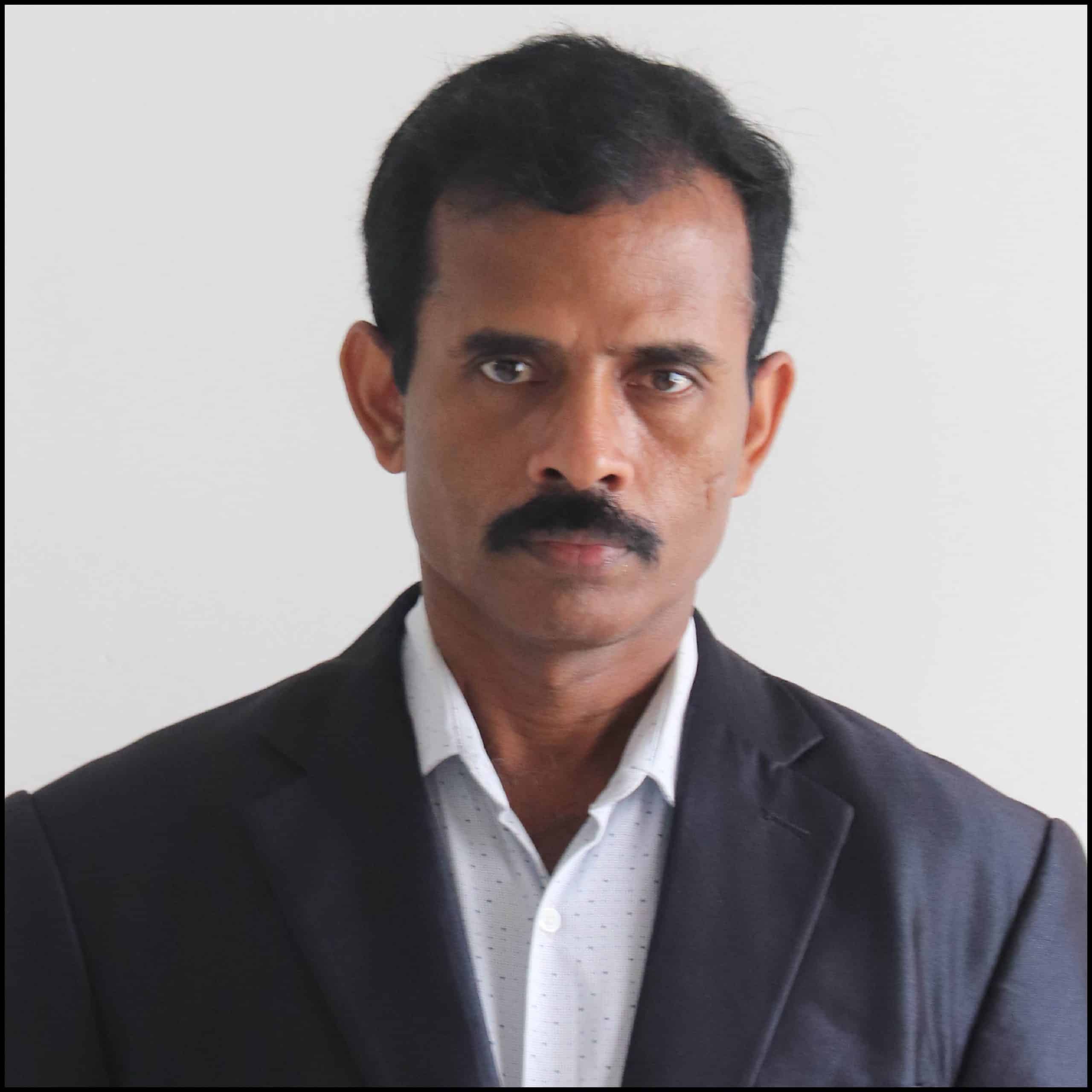
Dr. Y V Reddy
HOD – Cyber Security department, AU
Y V Reddy is a Senior Member of IEEE and ACM. He earned his M. Tech from Andhra University, Visakhapatnam, and his Ph.D. from NIT Tiruchirappalli. During his research, he developed an algorithm to facilitate key exchange among multiple parties by extending the Diffie-Hellman key exchange protocol. This innovation is particularly applicable for automating joint accounts in banking systems and enhancing security in cloud computing environments. He has published 18 research articles, including 4 in SCI-indexed journals, with the remaining publications appeared in Scopus-indexed journals and conferences. Additionally, he has been granted three patents in collaboration with his research supervisor, Dr. P.J.A. Alphonse, Professor at NIT Tiruchirappalli.
Career Paths
Cyber Security Analyst
Ethical Hacker
Security Architect
Cloud Security Engineer
Cyber security Faculty
S.N.O | Name of the Faculty | Highest degree | Present Designation |
1 | Dr. A Prasanth Rao | Ph.D | Professor |
2 | Dr. Y Venkatramana Reddy | Ph.D | Professor |
3 | Dr. K Nagamani | Ph.D | Associate Professor |
4 | Dr. S.Jayanth | Ph.D | Assistant Professor |
5 | Ms. N.Naga Lakshmi | M.Tech | Assistant Professor |
6 | Mr. G.Sai Krishna | M.Tech | Assistant Professor |
7 | Mr. I Mahesh Kumar Swamy | M.Tech | Assistant Professor |
8 | Mr. S. Vijay Kumar | M.Tech | Assistant Professor |
9 | Mr. Muneer Ahmed | M.Tech | Assistant Professor |
10 | Mr. Ch. Ravi Kumar | M.Tech | Assistant Professor |
11 | Ms.M. Prasanna Reddy | M.Tech | Assistant Professor |
12 | Ms. A. Anitha | M.Tech | Assistant Professor |
13 | Ms.D.Tejaswini | M.Tech | Assistant Professor |
14 | Mr.O.Subhas Chandra Goud | M.Tech | Assistant Professor |
15 | Dr. Sujoy Bhattacharya | Ph.D. | Professor of Practice |
16 | Mr. Chavali Sridhar | M.Tech | Professor of Practice |
